A spreadsheet is the best place in the world to start tracking your kit, and one of the more dangerous places to stay. It's free, it's familiar, and for a while it's genuinely enough. Then, without any announcement, it stops describing reality — and it keeps looking exactly as trustworthy as it did the day it was still right.
The wall isn't a row count, whatever the title of this note suggests. Plenty of people run five thousand rows without trouble, because they are the only person who ever touches the file. The wall is a concurrency count. It arrives with the second person.
The moment two people can change the same list, the spreadsheet faces a problem it was never built to solve: whose version is real? One person marks the drill returned. Another, working from a copy opened an hour earlier, marks it out. Both save. One truth quietly overwrites the other — no warning, no record of the collision. The file is still green, still tidy, and now wrong.
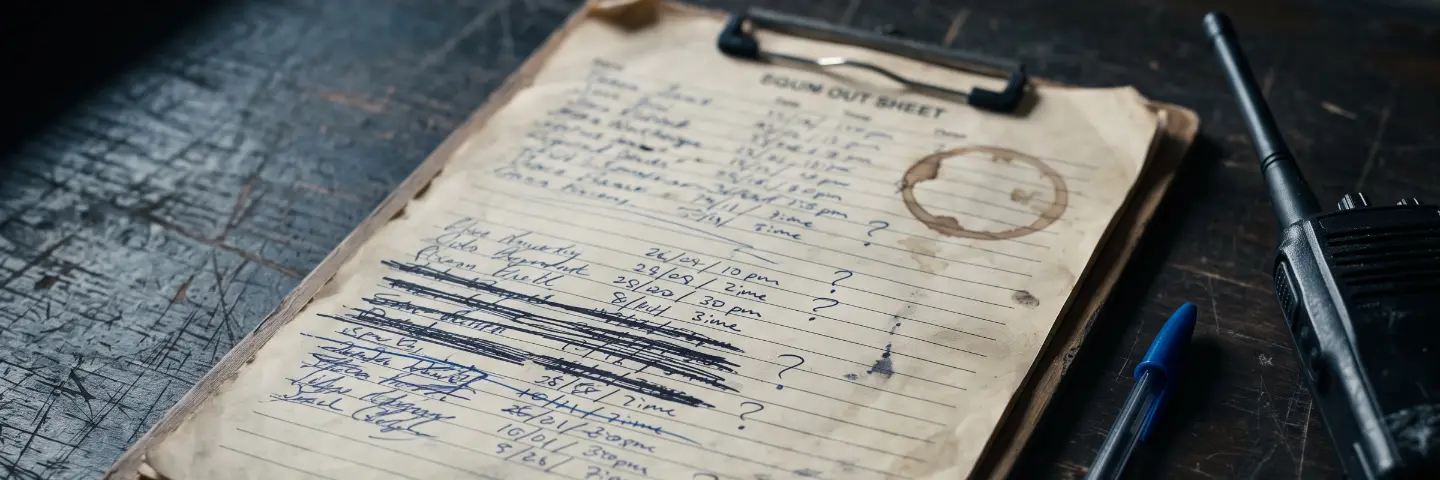
You can spot a sheet that's hit the wall without even opening it. It's in the filename: final, then final_v2, then final_v3_REAL, then the one with someone's initials bolted on. It's the column everyone agreed to keep updated and nobody has touched in months. It's the colour-coding that made sense to one person who has since left, and now functions as a small archaeological site.
A spreadsheet presents a wrong answer with exactly the same authority as a right one.
That's the real danger — not the mess, but the confidence. There's no "last updated by", no history of who changed what, no way to ask the file how it got into this state. When the sheet and the world disagree, the world doesn't get a vote, and people act on the sheet.
What replaces a spreadsheet isn't "software" as a status symbol. It's three specific things the sheet can't give you: a single copy everyone edits at once without overwriting each other; a history that remembers every change and who made it; and rules that stop two people from handing out the same thing twice. Everything else is detail.
That's the line GearLogs is built along — one shared record instead of a scatter of copies, every action kept with its author and time, counts that can't drift because the system won't let two people spend the same item. You can absolutely start in a spreadsheet; most good operations did. The skill is noticing the day it stopped being true, and moving before the gap between the list and the world grows large enough to cost you.