Depending on which study you read and which sector you're in, organisations quietly lose somewhere between five and fifteen percent of their movable assets in a year. The range is wide because the thing being measured is, almost by definition, the stuff nobody was watching. The honest version is shorter: more than you'd think, and less than you could ever prove.
Shrinkage is an unhelpful word, because it sounds like weather — something that happens to you. In practice it's three ordinary leaks, none of them dramatic, and all of them fixable once you can see them.
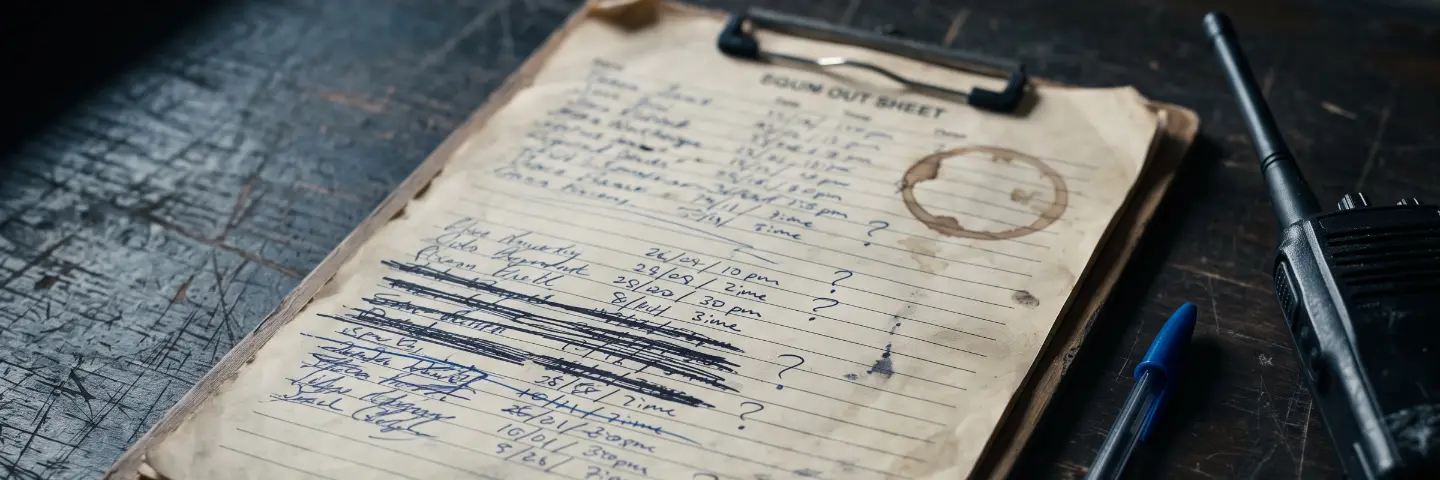
The first is the item that went out and never came back. Someone borrowed the good ladder for a job, the job ended, the ladder stayed. No theft, no incident — just an open loop that nobody closed, because nobody was holding the other end of it. Multiply one open loop by a year of small favours and you've quietly furnished someone else's van.
The second is the item that broke, or walked, and was written off in conversation but never on paper. "That one's dead — everyone knows." The record still lists it as available, so it gets counted, searched for, and re-ordered around. The loss already happened. The books just haven't heard about it yet.
The gap between what the list says you own and what you could put your hands on today — that's the number that matters, and the one almost nobody totals up.
The third is the phantom: on the books, not in the world. It's the sum of the first two — and it's the figure almost nobody measures, because measuring it means admitting it exists. Shrinkage hides because it's spread thin. No single loss is worth a meeting. A radio here, a cable there, a jacket, a scanner — each one sits just beneath the threshold where anyone acts, and that is precisely why the total climbs.
The fix isn't a crackdown. Cameras and suspicion cost more than they save and poison the room. The fix is visibility early enough to matter: a record that separates lost from damaged from stolen from simply-not-back-yet, so a small leak reads as a small leak while it's still small — and a pattern reads as a pattern before it has to become a policy.
GearLogs keeps that record as a plain, permanent ledger. When something is written off, the reason is written with it, and the item leaves your available count instead of haunting it. You don't get an accusation. You get a number you can finally see — and a number you can see is a number you can start to shrink.