Sooner or later, something doesn't come back. A tool is lost, a device is damaged beyond use, a piece of kit walks off and never returns. What happens in the next five minutes — how the organization records that loss — is the difference between a clean account and a hole nobody can explain later.
The first thing worth being precise about is that write-off, loss, and damage are not the same event. A write-off is a decision: this asset is off the books. A loss is an unknown: we don't know where it is. Damage is a condition: it exists, but it can't be used. They lead to different records and, often, to different consequences for who's accountable — and blurring them together is how disputes start.
"It's gone" is a conclusion. The record has to show the work behind it.
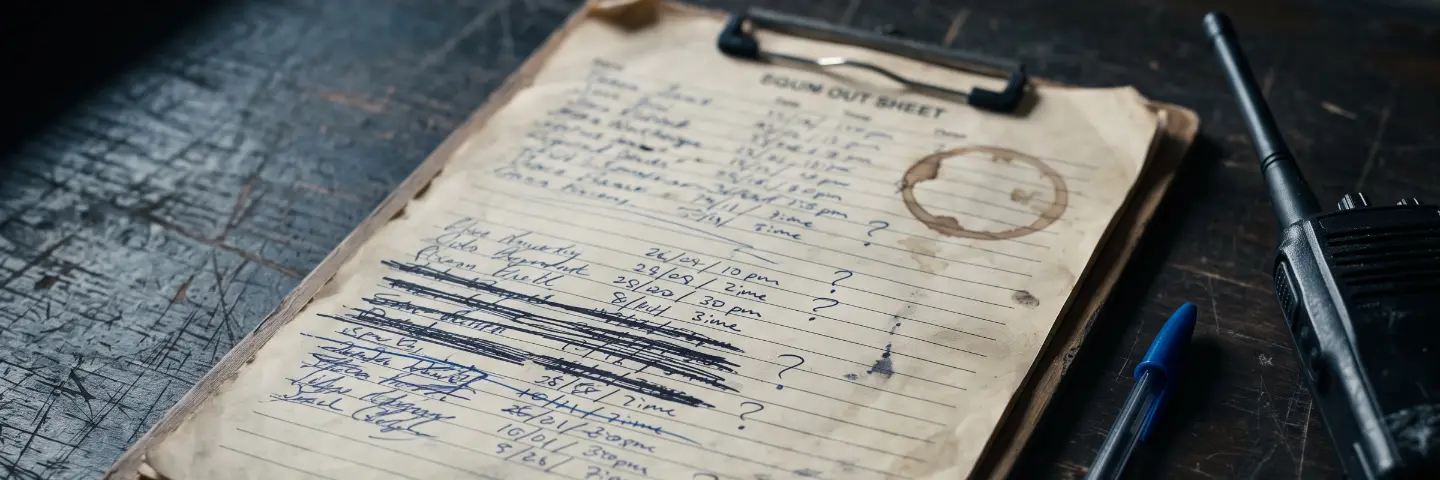
Without a system, the write-off is informal by default. A verbal "just take it off the list". A note in a margin. A deleted row in a spreadsheet. The problem with all three is the same: they leave no trail. A missing row doesn't record that something was lost — it records nothing at all, and six months later there's no way to tell the difference between a proper write-off and a mistake.
A defensible loss record captures more than the fact of the loss. It captures when it was reported and by whom, who had custody last, the condition at that point, the outcome, and the final disposition — written off, recovered, replaced. That's the difference between a record that answers questions and one that raises them.
This is where loss tracking and custody tracking turn out to be the same problem. The first questions asked about any missing item are about its history: who had it last, and was it already flagged as damaged or unaccounted for? A write-off record that connects back to that custody history is one you can stand behind. One that floats free — a name and a date with nothing behind it — is not.
There's a quiet failure mode worth naming: deletion as write-off. Removing the record is the most tempting way to "handle" a loss, and the worst, because it destroys exactly the evidence an audit will ask for. A written-off item should be marked as written off and kept, not erased. The record of a loss is not the thing you want to lose.
None of this requires a heavy investigation process for a small team. It requires that losses be recorded rather than deleted, that each one carry its reason and its history, and that recovered items can be brought back onto the books without losing the trail. Accountability, not bureaucracy.
GearLogs keeps this record for you. Written-off and lost gear goes into a ledger that's kept, not erased — connected to the item's custody history, marked with its reason and disposition, and reversible if the item turns up. The account stays clean, and the work behind every "it's gone" stays visible.