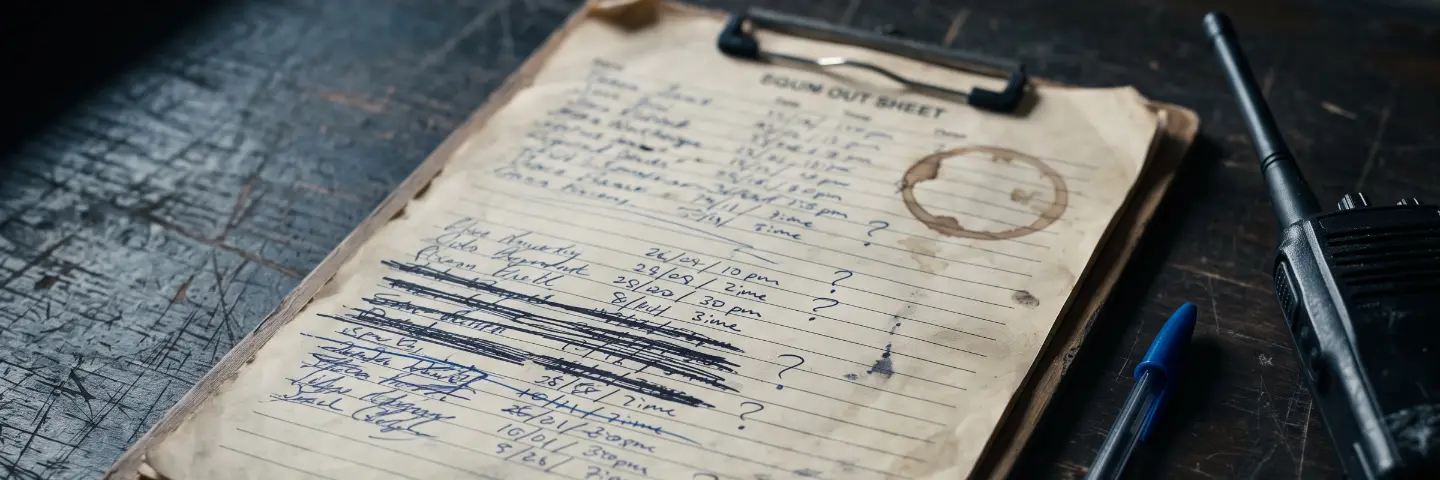
Every piece of equipment you buy comes with some kind of promise attached. A manufacturer’s warranty. A service contract. An extended-coverage plan the vendor talked you into at purchase. On the day it arrives, the coverage is fresh in everyone’s mind. Six months later, when the thing actually breaks, the coverage is the last thing anyone thinks to check — and that’s exactly when it’s worth money.
The cost of forgetting is quiet, which is why it’s easy to keep paying. A radio fails and gets sent out for a paid repair that a live warranty would have covered for free. A tool gets written off and replaced when it was still under a service plan that would have swapped it. You paid for the coverage once, and then you paid again for the thing it was supposed to protect you from. Neither payment shows up on a report as a loss. The money just never gets recovered.
It happens because coverage lives in the wrong place. It’s a PDF in someone’s inbox, a line in a purchase order, a login to a vendor portal nobody remembers. It’s attached to a transaction — the day you bought a batch of ten — not to the unit that’s now sitting broken on a bench. When the unit fails, nobody walks backward from the broken radio to the contract that covers it, because there’s no thread connecting the two.
A warranty only pays out if you remember it exists at the moment something breaks.
The fix starts by attaching coverage to the gear, not to the paperwork. When a warranty date lives on the individual unit — and a service contract points at exactly the units or the lot it covers — the question “is this still covered?” has an answer that’s right there on the item, at the moment you need it, without a hunt through old emails.
But attaching it isn’t enough on its own, because a date you have to go looking for is a date you’ll miss. The second half of the job is being told before coverage lapses, not after. Coverage that’s running out should come and find you — visible on the board where you already work, gathered into one list ordered by what expires soonest, and flagged far enough ahead that you can actually do something: renew it, file the claim while it’s live, or plan the replacement on your terms instead of in a panic.
A few details separate a system that helps from one that just stores dates. There should be one honest rule for which date applies when a unit, its lot, and its service contract each carry one, so you’re never guessing which promise is in force. The cost of a contract should be visible only to the people who ought to see it. And every change to a coverage date should leave a record, so “we were covered” is something you can prove, not just something you say.
This is what warranty and service-contract tracking in GearLogs is for. Put dates on units and whole lots, record the full contract — provider, coverage, number, dates, cost — against the exact gear it protects, and let the app show you what’s expiring, in colour, before it does. You decide how far ahead the warnings begin. Coverage stops being a thing you have to remember, and becomes a thing the system remembers for you.